






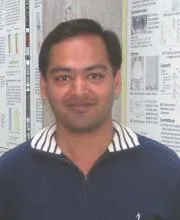
Dr. Vikas Jindal
Dr. Vikas Jindal is a Professor in the Department of Metallurgical Engineering, IIT (BHU), Varanasi. He received his B.Tech. from IIT Kanpur, M.S. from the Singapore-MIT Alliance (National University of Singapore), and Ph.D. from IIT (BHU). He was a Post-doctoral Fellow at the University of Utah, USA (2015–16). He leads the Materials Modeling Lab (MML) at IIT(BHU), focusing on computational thermodynamics, machine learning in materials design, and advanced alloy development. For full details visit: https://vijindal.github.io/MML_Group/
Research Interests:
- Experimental and DFT-based thermochemical data
- Cluster Variation Method and Cluster Expansion based Gibbs energy models
- Developing algorithms and software for phase diagram assessment optimization
- Development of CALPHAD databases and their applications in novel materials and processes
- Machine learning approaches for materials property prediction and alloy design
- Ti-TiB composites and functionally graded materials for defence and biomedical applications
- High Entropy Alloys: thermodynamic modelling and short-range ordering
- Beta-titanium alloys for biomedical implant applications
Current PhD Students:
- Harish Kumar (Registered 2023) — Computational Thermodynamics
- Murali Padiri (Registered 2021) — Ti-TiB Composites and Functionally Graded Materials
- Ishu Yadav (Registered 2020) — Beta-Titanium Biomedical Alloys (Co-supervisor)
- Roshan Kumar (Registered 2024) — Atomistic Simulations (Co-supervisor)
Grants & Projects:
Ongoing:
- Co-PI, Development of Low Modulus Beta-Titanium Alloy for Dental and Orthopedic Implant Applications, IIT(BHU) Challenge Grant, Rs. 45 Lakhs (July 2025-March 2027)
- Co-PI, Molten Metal Electrolysis — An Alternate Route of Steelmaking, SRTMI-SAIL, New Delhi (June 2025-Present)
Completed:
- Principal Investigator, Development of Functionally Graded Armor Composites (FGACs) Materials, DRDO-ARMREB, Rs. 91.66 Lakhs (2020-2023)
- Principal Investigator, Role of Short Range Ordering in Designing High Entropy Alloys, SERB Core Research Grant (CRG/2019/000430), Rs. 41.36 Lakhs (2019-2022)
- Co-PI, Development of Low-Cost Beta-Ti Alloy for Biomedical Applications, SERB Core Research Grant, Rs. 40.50 Lakhs (2020-2023)
- Investigator, Phase-diagrams and thermodynamic investigations of Ti-Hf-Zr system using CVM, IIT(BHU) Seed Grant (2018-2020)
- Project Leader, Free Energy Minimisation in Binary Alloys via Genetic Algorithms, UGC XI-Plan Research Grant for New Faculty (2012)
Teaching:
- Computational Methods for Metallurgy
- Heat Treatment
- Modeling and Simulation in Metallurgy
- Computer Application in Metallurgy
Full list of publications. Also available at Google Scholar.
[1] S. Kumar, V. Jindal, A hybrid cluster-expansion–informed machine learning framework for predicting enthalpy of mixing in BCC refractory binary alloys, Model. Simul. Mater. Sci. Eng. (2026). https://doi.org/10.1088/1361-651X/ae6ba1.
[2] S. Kumar, V. Jindal, Mechanistic and data-driven interpretation of Vickers microhardness in refractory high-entropy alloys, Intermetallics. 194 (2026) 109301. https://doi.org/10.1016/j.intermet.2026.109301.
[3] R. Kumar, S. Kumar, V. Jindal, A.J. Kailath, Atomistic simulation of Cu phase transition under constrained compression, J. Mater. Sci. (2026). https://doi.org/10.1007/s10853-026-12687-y.
[4] P. Murali, K. Chattopadhyay, V. Jindal, Comparative Analysis of Ti-TiB Composites and Functionally Graded Materials: Mechanical Properties and Fracture Behavior, J. Mater. Eng. Perform. (2026). https://doi.org/10.1007/s11665-026-13766-6.
[5] R. Kumar, V. Jindal, A.J. Kailath, Strain Rate and Size Effects on Deformation, Dislocation Evolution, and Phase Transformation in Magnesium Single Crystals: An Atomistic Study, J. Mater. Eng. Perform. (2026). https://doi.org/10.1007/s11665-025-12948-y.
[6] S. Kumar, V. Jindal, Integrating machine learning and DFT for hardness prediction in high-entropy alloys, MRS Commun. (2025). https://doi.org/10.1557/s43579-025-00736-7.
[7] V. Jindal, S. Lele, Multicomponent cluster variation method: Application to high entropy alloys, Calphad. 89 (2025) 102825. https://doi.org/10.1016/j.calphad.2025.102825.
[8] P. Murali, K. Chattopadhyay, V. Jindal, Effect of hot-pressing sintering temperature and pressure on the densification and properties of Ti-TiB composites, J. Alloy. Metall. Syst. (2024) 100132. https://doi.org/10.1016/j.jalmes.2024.100132.
[9] S. Kumar, A. Linda, Y. Shadangi, V. Jindal, Influence of micro-segregation on the microstructure, and microhardness of MoNbTaxTi(1-x)W refractory high entropy alloys: Experimental and DFT approach, Intermetallics. 164 (2024) 108080. https://doi.org/10.1016/j.intermet.2023.108080.
[10] S. Kumar, A.K. Thakur, V. Jindal, K. Muralidharan, A Neural Network Driven Approach for Characterizing the Interplay Between Short Range Ordering and Enthalpy of Mixing of Binary Subsystems in the NbTiVZr High Entropy Alloy, J. Phase Equilibria Diffus. 44 (2023) 520–538. https://doi.org/10.1007/s11669-023-01055-x.
[11] S. Kumar, V. Jindal, Modeling Short-Range Ordering in Binary BCC Ti-X (X = Nb, V, Zr) Alloys using CE-CVM, J. Phase Equilibria Diffus. 43 (2022) 511–526. https://doi.org/10.1007/s11669-022-00989-y.
[12] A. Ranjan, V. Jindal, R. Tyagi, Effect of Load on Tribological Properties of Ti–TiB–Fe Composites Processed via Spark Plasma Sintering (SPS), Trans. Indian Inst. Met. 75 (2022) 2847–2856. https://doi.org/10.1007/s12666-022-02651-0.
[13] S. Kumar, V. Jindal, First-principles calculations and thermodynamic assessment of the Nb–V system using CE-CVM, Calphad. 78 (2022) 102439. https://doi.org/10.1016/j.calphad.2022.102439.
[14] A. Ranjan, R. Tyagi, V. Jindal, Reciprocating Wear of Ti-TiB In Situ Composites Synthesized via Vacuum Arc Melting, J. Mater. Eng. Perform. 31 (2022) 9985–9996. https://doi.org/10.1007/s11665-022-07002-0.
[15] S. Kumar, V. Jindal, Thermodynamic Re-assessment of the Nb-Zr System Using the CE–CVM Model for Solid Solution Phases, J. Phase Equilibria Diffus. 43 (2022) 277–286. https://doi.org/10.1007/s11669-022-00959-4.
[16] R.P. Gorrey, V. Jindal, B.N. Sarma, S. Lele, Thermodynamics of Binary bcc and fcc Phases for Exclusive Second-Neighbour Pair Interactions Using Cluster Variation Method: Analytical Solutions, Trans. Indian Inst. Met. 75 (2022) 1365–1381. https://doi.org/10.1007/s12666-021-02469-2.
[17] A.K. Thakur, R.P. Gorrey, V. Jindal, K. Muralidharan, A data-driven approach to approximate the correlation functions in cluster variation method, Model. Simul. Mater. Sci. Eng. 30 (2022) 015001. https://doi.org/10.1088/1361-651X/ac3a16.
[18] N. Joshi, M.K. Dash, C. Upadhyay, V. Jindal, P.K. Panda, M. Shukla, Physico-chemical characterization of kajjali, black sulphide of mercury, with respect to the role of sulfur in its formation and structure, J. Ayurveda Integr. Med. 12 (2021) 590–600. https://doi.org/10.1016/j.jaim.2021.05.006.
[19] R.P. Gorrey, V. Jindal, B.N. Sarma, S. Lele, Modification of Cluster Variation Method Entropy Functional for Binary fcc Phases using Tetrahedron Approximation, Trans. Indian Inst. Met. 74 (2021) 129–136. https://doi.org/10.1007/s12666-020-02119-z.
[20] R.P. Gorrey, V. Jindal, B.N. Sarma, S. Lele, Polynomial functions for configurational correlation functions in Gibbs energies of solid solutions using cluster variation method, Comput. Mater. Sci. 186 (2021) 109746. https://doi.org/10.1016/j.commatsci.2020.109746.
[21] A.K. Thakur, V.K. Pandey, V. Jindal, Calculation of Existence Domains and Optimized Phase Diagram for the Nb-Ti Binary Alloy System Using Computational Methods, J. Phase Equilibria Diffus. 41 (2020) 846–858. https://doi.org/10.1007/s11669-020-00843-z.
[22] A. Ranjan, R. Tyagi, V. Jindal, K.S.R. Chandran, Investigation on Wear Characteristics of TiBFe Composites Containing 10 at.% Boron and 10-30 at.% Iron, J. Mater. Eng. Perform. 29 (2020) 6333–6342. https://doi.org/10.1007/s11665-020-05130-z.
[23] R.P. Gorrey, V. Jindal, B.N. Sarma, S. Lele, Analytical solutions for the correlation functions of perfectly ordered binary phases based on bcc, fcc and cph structures using cluster variation method, Calphad. 71 (2020) 101773. https://doi.org/10.1016/j.calphad.2020.101773.
[24] J. Du, V. Jindal, A.P. Sanders, K.S. Ravi Chandran, CALPHAD-guided alloy design and processing for improved strength and toughness in Titanium Boride (TiB) ceramic alloy containing a ductile phase, Acta Mater. 171 (2019) 18–30. https://doi.org/10.1016/j.actamat.2019.03.040.
[25] V. Jindal, A. Sarda, A. Degnah, K.S. Ravi Chandran, Effect of iron & boron content on the Spark Plasma Sintering of Ti-B-Fe alloys, Adv. Powder Technol. 30 (2019) 423–427. https://doi.org/10.1016/j.apt.2018.11.021.
[26] J. Akram, P.R. Kalvala, V. Jindal, M. Misra, Evaluating location specific strain rates, temperatures, and accumulated strains in friction welds through microstructure modeling, Def. Technol. 14 (2018) 83–92. https://doi.org/10.1016/j.dt.2017.11.002.
[27] J. Du, A.P. Sanders, V. Jindal, K.S.R. Chandran, Rapid in situ formation and densification of titanium boride (TiB) nano-ceramic via transient liquid phase in electric field activated sintering, Scr. Mater. 123 (2016) 95–99. https://doi.org/10.1016/j.scriptamat.2016.06.010.
[28] V. Jindal, P.K.P. Rupa, G.K. Mandal, V.C. Srivastava, Effect of High-Temperature Severe Plastic Deformation on Microstructure and Mechanical Properties of IF Steel, J. Mater. Eng. Perform. 23 (2014) 1954–1958. https://doi.org/10.1007/s11665-014-0977-9.
[29] V. Jindal, B. Nageswara Sarma, S. Lele, An improved CVM entropy functional for binary fcc alloys, Comput. Mater. Sci. 84 (2014) 129–133. https://doi.org/10.1016/j.commatsci.2013.11.062.
[30] V. Jindal, B.N. Sarma, S. Lele, An improvement of cluster variation method entropy functional for bcc alloys, Calphad. 43 (2013) 48–51. https://doi.org/10.1016/j.calphad.2013.10.004.
[31] V. Jindal, B.N. Sarma, S. Lele, A thermodynamic assessment of the Cr–Mo system using CE-CVM, Calphad. 43 (2013) 80–85. https://doi.org/10.1016/j.calphad.2013.10.003.
[32] V.C. Srivastava, T. Singh, S. Ghosh Chowdhury, V. Jindal, S.G. Chowdhury, Microstructural Characteristics of Accumulative Roll-Bonded Ni-Al-Based Metal-Intermetallic Laminate Composite, J. Mater. Eng. Perform. 21 (2012) 1912–1918. https://doi.org/10.1007/s11665-011-0114-y.
[33] V. Jindal, V.C. Srivastava, V. Uhlenwinkel, On the role of liquid phase stability and GFA parameters, J. Non. Cryst. Solids. 355 (2009) 1552–1555. https://doi.org/10.1016/j.jnoncrysol.2009.05.049.
[34] V.C.C. Srivastava, V. Jindal, V. Uhlenwinkel, K. Bauckhage, Hot-deformation behaviour of spray-formed 2014 Al+SiCp metal matrix composites, Mater. Sci. Eng. a-Structural Mater. Prop. Microstruct. Process. 477 (2008) 86–95. https://doi.org/10.1016/j.msea.2007.06.086.
[35] V. Jindal, V.C.C. Srivastava, Growth of intermetallic layer at roll bonded IF-steel/aluminum interface, J. Mater. Process. Technol. 195 (2008) 88–93. https://doi.org/10.1016/j.jmatprotec.2007.04.118.
[36] V. Jindal, V.C. Srivastava, R.N. Ghosh, Development of IF steel–Al multilayer composite by repetitive roll bonding and annealing process, Mater. Sci. Technol. 24 (2008) 798–802. https://doi.org/10.1179/174328406X148688.
[37] V. Rajinikanth, V. Jindal, V.G. Akkimardi, M. Ghosh, K. Venkateswarlu, Transmission electron microscopy studies on the effect of strain on Al and Al-1% Sc alloy, Scr. Mater. 57 (2007) 425–428. https://doi.org/10.1016/j.scriptamat.2007.04.038.
[38] V. Jindal, P.K. De, K. Venkateswarlu, Effect of Al3SC precipitates on the work hardening behavior of aluminum-scandium alloys, Mater. Lett. 60 (2006) 3373–3375. https://doi.org/10.1016/j.matlet.2006.03.017.
[39] V. Jindal, V.C. Srivastava, A. Das, R.N. Ghosh, Reactive diffusion in the roll bonded iron–aluminum system, Mater. Lett. 60 (2006) 1758–1761. https://doi.org/10.1016/j.matlet.2005.12.013.
The Materials Modeling Lab develops computational tools and databases for advanced alloy design, combining classical thermodynamic modelling (CALPHAD, CVM, Cluster Expansion) with machine learning and atomistic simulations. We invite motivated students to join an active, funded research group with a strong placement record.
What we work on
High entropy alloys Thermodynamic modelling of short-range ordering and phase stability in Nb-Ti-V-Zr and related refractory systems. Building CE-CVM databases for multicomponent alloys. | Machine learning in materials ML + DFT models for hardness and enthalpy prediction in high-entropy alloys. Neural network approaches for characterising short-range ordering. |
Ti-TiB composites & FGMs CALPHAD-guided design and processing of Ti-TiB functionally graded armour composites for defence and biomedical applications. DRDO-funded work. | Beta-Ti biomedical alloys Low-modulus beta-titanium alloy design for dental and orthopaedic implants using thermodynamic modelling and DFT. IIT(BHU) Challenge Grant funded. |
What we look for
We welcome candidates from metallurgy, materials science, physics, chemistry, or computational engineering backgrounds. No single profile is required, curiosity and willingness to learn new methods matter most. Coding ability can be developed in the lab and is not a prerequisite.
Useful backgrounds and skills include: thermodynamics and phase diagrams, computational methods, Python, DFT or VASP experience, and strong mathematical foundations.
Where our alumni are
MML graduates hold faculty positions at premier institutions and research roles at leading industry and national labs:
- Dr. Shanker Kumar (PhD 2024) — Assistant Professor, Dept. of Metallurgical and Materials Engineering, NIT Warangal. Profile
- Dr. Rajendra Prasad Gorrey (PhD 2021) — Post-doc, University of Virginia, USA (2023–24) → Assistant Professor, NIT Andhra Pradesh. Profile
- Dr. Ashwani Ranjan (PhD 2023) — R&D Project Manager (HJT & Perovskite solar cell technologies), Reliance Industries Ltd., Jamnagar.
How to apply
PhD and M.Tech admissions are through the official IIT(BHU) PG admissions portal. GATE qualification is required for PhD fellowships.
Apply via DOAA — PG Admissions, IIT(BHU) →
Before applying, you are welcome to write directly to discuss your research interests and check for available positions:
Email: vjindal.met@iitbhu.ac.in
For full details on the lab, current projects, and group members, visit the MML Group webpage .