






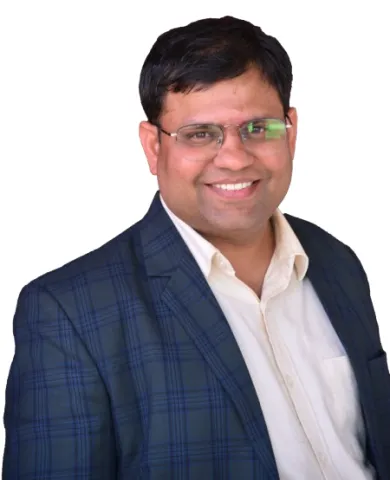
Dr. Tara Chand
Dr. Tara Chand is an Assistant Professor at the Indian Institute of Technology (BHU), Varanasi. He received his Ph.D. in Cognitive Science from the University of Tübingen, Germany, where he conducted research at the intersection of the Max Planck Institute for Biological Cybernetics and the Psychiatry Clinic in Tübingen. Following his doctorate, he served as a postdoctoral fellow at the Institute of Psychology, Friedrich Schiller University of Jena, Germany, working with Prof. Ilona Croy on affective processing during social interactions. Before joining IIT (BHU), he was an Assistant Professor at the Jindal Institute of Behavioural Sciences, O.P. Jindal Global University, Sonipat.
Dr. Chand’s research lies at the intersection of cognitive psychology, neuropsychology, and behavioral sciences. His work broadly examines affective processing in the brain and body using multimodal acquisition and analysis approaches. His doctoral research with Prof. Dr. Martin Walter investigated the dynamics of the central–peripheral stress response to acute psychosocial stress, shedding light on the interplay between stress and physiological mechanisms. He also explored the emotional modulation of psychophysiological signals under the influence of ketamine during his time as a research associate at the Department of Psychiatry and Psychotherapy, University Hospital Jena.
In addition to affective neuroscience, Dr. Chand’s current research interests extend to cognitive psychology domains such as prospective memory, decision-making, and applied fields including neuromarketing. He has published in peer-reviewed journals, presented at national and international conferences, and received the prestigious Rosalind Franklin Society (RFS) Award in Science for his contributions. His teaching experience spans courses in cognitive psychology, neuropsychology, and methods in affective neuroscience.
Education
- Ph.D | 2022 | University of Tübingen, Tübingen (Faculty: Cognitive Science)
- Bachelor of Technology | 2014 | CCT, University of Rajasthan, Jaipur (Major: Cognitive and Neuroscience)
- Master of Technology | 2015 | CCT, University of Rajasthan, Jaipur (Major: Cognitive and Neuroscience)
- Bachelor of Science | 2009 | Maharaja Ganga Singh University, Bikaner (Major: Chemistry, Botany, Zoology)
- Brodeur, A., Baki, G. A., Fazio, L., & Chand T... (2026). Mass reproducibility in psychological science (I4R Discussion Paper Series No. 326). Institute for Replication.
- Choudhary, V., Shukla, M., Chand, T., Selvaraj, A., Khurana, R., Kalsi, N., & Nazir, M. I. (2026). Adaptive emotion regulation and coping strategies as correlates of AI-based mental health support acceptability among university students. Research Square. https://doi.org/10.21203/rs.3.rs-9875800/v1
- Kochhar, S., Thakur, N., Heilmann, K., Colic, L., Hamid, L., Chand, T., ... & Bathula, D. R. (2026, April). Personalized Stress Detection Through Reinforcement Learning Based Domain Adaptation. In 2026 IEEE 23rd International Symposium on Biomedical Imaging (ISBI) (pp. 1-4). IEEE.
- Bi, Z., Li, M., Li, M., Peng, Z., Zhu, M., Chand T., ... & Cao, Y. (2026). Visual cortical functional connectivity alterations and their associations with psychotic symptoms in early-onset bipolar disorder. Journal of Affective Disorders, 121229.
- Bi Z, Li M, Li M, Xin Y, Yu Z, Qiu C, Aruci M, Chand T, Walter M, He L, Lizano P, Cao Y (2026). White matter alterations in the corpus callosum and visual cortical regions associated with depressive and psychotic symptoms in early-onset bipolar disorder. Psychiatry and Clinical Neurosciences (Accepted)
- Palla S, Iyengar D, Dhankar S, Junnarkar M, Chand T, Nair VS. (2025) Evaluation of the Biopsychosocial Model of Health among Emerging Adults. BMC Psychology (Accepted)
- Tang, Y., Chand, T., Mamaev, I., Hein, B., & Croy, I. (2025). Evaluation of the human-like robotic touch: A user study. In 2025 International Conference on Rehabilitation Robotics (ICORR) (pp. 1353–1360). IEEE.
- Krylova M , Alizadeh S , Jamalabadi H, Izyurov I , Chand T , van der Meer J, Vester JC , Naschold B, Schultz M, Engert V, Walter M. Comprehensive mitigation of peripheral and central stress responses by Nx4: Insights from EEG and heart rate variability in post-stress resting state. Human Psychopharmacology: Clinical and Experimental (Accepted)
- Shadaydeh, M., Noering, V., Franz, M., Chand, T., Croy, I., & Denzler, J. (2025). Directionality of Interpersonal Neural Influence in Functional Near‐Infrared Spectroscopy Hyperscanning: Feasibility of Information–Theoretic Causality Analysis in Motor Tasks. European Journal of Neuroscience, 62(6), e70252.
- Cao Y*, Lizano P*, Qiu C, Li M; Colic L, Chand T, …; Walter M#, Jia Z#(2025). White matter subgroups of bipolar II depression associate with inflammation, psychiatric symptoms, and childhood emotional maltreatment. Nature Mental Health 1-11.
- Fiederer C, Chand T, Martens L, Ristow I, Durner V, Abler B, Walter, Graf H (2025). Resting-state functional connectivity within the reward system mediates subcortical integration during erotic stimulus processing. The World Journal of Biological Psychiatry, 1-10. IF: 3
- Purrer, V., Chand, T., Pohl, E., Weiland, H., Borger, V., Schmeel, C., ... & Wüllner, U. (2025). Quantitative and qualitative tremor evaluation after MR-guided focused ultrasound thalamotomy. Frontiers in Neurology, 16, 1594382. IF: 2.7
- Cao, Y., Lizano, P., Li, M., Opel, N., Sen, Z. D., Colic, L., Sun, H., Zhou, X., Aruci, M., Chand, T., Long, X., Deng, G., Mu, J., Guo, S., Sun, H., Gong, Q., Qiu, C., Walter, M., & Jia, Z. (2025). Association between peripheral inflammation and body mass index on white matter integrity and free water in bipolar II depression. Brain, Behavior, and Immunity, 128, 208–218. IF: 8.5
- Troll, M., Li, M., Chand, T., Machnik, M., Rocktäschel, T., Toepffer, A., ... & Besteher, B. (2025). Altered corticostriatal connectivity in long-COVID patients is associated with cognitive impairment. Psychological Medicine, 55, e49..Accepted. IF: 7.7
- De Felice, S., Chand, T., Croy, I., Engert, V., Goldstein, P., Holroyd, C. B., ... & Vrticka, P. (2025). Relational Neuroscience: insights from hyperscanning research. Neuroscience & Biobehavioral Reviews, 169, 105979. IF: 7.6
- Cao, Y., Lizano, P., Li, M., Chand, T., Sun, H., Zhou, X., ... & Jia, Z. (2025). White matter microstructural and inflammation-based subgroups in bipolar disorder II depression differentiate in depressive and psychotic symptoms. Journal of Affective Disorders, 368, 493-502. IF: 4.9
- Xiao H*, Cao Y*, Lizano P, Li M; Sun H, Zhou X, Deng G, J Li, Chand T, Jia Z; Walter M, Qiu C. (2024). Interleukin-1β moderates the relationships between middle frontal- mACC /insular connectivity and depressive symptoms in bipolar II depression. Brain Behavior and Immunity, , 120, 44-53.IF: 19.227
- Chand, T., Weiß, M., & Gutzeit, J. (2024). A Comment on identity effects in social media-Taylor et al. (2023). I4R Discussion Paper Series No. 172.
- Sen, Z. D., Sharma, N., Danyeli, L. V., Colic, L., Opel, N., Chand, T., ... & Li, M. (2024). Ketamine-induced pleasant but not unpleasant dissociation is linked to the functional connectivity profile of the posteromedial cortex. PsyArxiv Preprint
- Sen ZD*, Chand T*, Danyely LV, Kumar V, Colic L, Li M, Javaheripour N, Yemişken M, Deliano, M Walter (2023) The effect of a single S-Ketamine infusion on resting- state functional connectivity within the modulatory pathway of the startle reflex and its affective modulation. Scientific Reports 13 (1), 13323, IF: 4.9
- Javaheripour N, Colic L, …, Chand T, …, Wagner G, M Walter (2023) Altered brain dynamic in major depressive disorder: state and trait features. Translational Psychiatry 13 (1), 261, IF: 7.989
- Guo ZP, Tang LR, Gao Y, Li M, Chand T, Walter M, Wang L*, Liu CH. (2023) Decreased inter-hemispheric functional connectivity in the insula is associated with illness duration in recurrent depression. Journal of Affective Disorders, 15;329:88-95, IF: 6.533
- Danyeli LV, Sen ZD, ..., Chand T, ..., Li M, Walter M (2023). Association of the delayed changes in glutamate levels and functional connectivity with the immediate network effects of S-ketamine. Translational psychiatry, 16;13(1):60, IF: 7.989
- Zepeda MN, Alizadeh S, Chand T, Kasties V, Fan Y, Fensky L, Walter M (2023). Trait anxiety is related to Nx4’s efficacy on stress-induced changes in amygdala-centered resting state functional connectivity: a placebo-controlled cross-over trial in mildly to moderately stressed healthy volunteers. BMC neuroscience, 23(1), 1-12., IF:3.28
- Chand T, Fan Y, Li M, Jamalabadi H, Danyeli L, Zepeda MN, Fensky L, van der Meer J, Eskoetter H, Schultz M, Walter M (2022). Nx4 modulated resting-state functional connectivity between amygdala and prefrontal cortex in a placebo-controlled, crossover trial. Brain Connectivity, 12(9), 812-822., IF:2.657
- Li M, ..., Chand T, ..., Sen Z (2022). The differential association between local neurotransmitter levels and whole-brain resting-state functional connectivity in two distinct ACC subregions. Hum Brain Mapp. 43(9):2833-2844.,. IF:5.399
- Javaheripour, N., Li, M., Chand, T., Krug, A., Kircher, T., Dannlowski, U., ... & Wagner, G. (2021). Altered resting-state functional connectome in major depressive disorder: a mega-analysis from the PsyMRI consortium. Translational psychiatry, 11(1), 1-9. IF: 7.989
- Chand, T., Alizadeh, S., Jamalabadi, H., Herrmann, L., Krylova, M., Surova, G., ... & Walter, M. (2021). EEG revealed improved vigilance regulation after stress exposure under Nx4–A randomized, placebo-controlled, double-blind, cross-over trial. IBRO neuroscience reports, 11, 175-182. IF: 2.70
- Chand T, Li M, Jamalabadi H, Wagner G, Lord A, Alizadeh S, Danyeli LV, Herrmann L, Walter M and Sen ZD (2020) Heart Rate Variability as an Index of Differential Brain Dynamics at Rest and After Acute Stress Induction. Front. Neurosci. 14:645. IF: 5.152
Barupal J K, Saini A K, Chand, T, Meena A, Beniwal S, Suthar J R, ... & Kothari S L (2015). ”ExcellmiRDB for Translational Genomics: A Curated Online Resource for Extracellular MicroRNAs.”Omics: a journal of integrative biology 19, no. 1: 24-30. IF: 3.978
Abstracts In Conference Proceedings
- Jamalabadi H, Chand T, Alizadeh S, Schultz M, Walter M (2017). Effects of Neurexan® on reduced stress responsivity in the autonomic nervous system measured by heart rate variability. WPA 2017 Berlin. SAGE Journals. https://doi.org/10.1177/155005941875650
- Chand T, Colic L, Li M, Fensky L, Kühnel A, Teckentrup A, Schultz M, Fan Y, Walter M (2017). Effects of Neurexan® on amygdala-centered resting state functional connectivity, WASAD Congress 2017, Würzburg, Germany. Journal of Neural Transmission 124 (10), pp 1277–1328. https://doi.org/10.1007/s00702-017-1777-9
- Chand T, Jamalabadi H, Alizadeh S, Sen DZ, Fensky L, Walter M, Effects of Nx4 on reduced stress responsibility reflected by heart rate variability (2019). Psychoneuroendocrinology, DOI: 10.1016/j.psyneuen.2019.07.032–
- Chand T, Jamalabadi H, Alizadeh S, Sen DZ, Fensky L, Walter M, Nx4 reduced the central and peripheral stress response – NEURIM trial, a post hoc analysis (2020). Psychoneuroendocrinology, DOI: 110.1016/j.psyneuen.2020.104969
- Zepeda, M. N., Alizadeh, S., Chand, T., Kasties, V., Fan, Y., Herrmann, L., & Walter, M. (2020). P. 108 Effect of a natural medicinal product on neural response to psychosocial stress is associated with personality traits. European Neuropsychopharmacology, 40, S68-S69.DOI: 10.1016/j.euroneuro.2020.09.092.
- Chand T, Herrmann L, Kasties V, Boden C, Li M, Fan Y, ..., Walter M (2021). Nx4 attenuated stress-induced activity of the anterior cingulate cortex: a post-hoc analysis of a placebo-controlled crossover trial, WASAD Congress 2021, Vienna, Austria. J Neural Transm 128, 17671812. https://doi.org/10.1007/s00702-021-02422-z
- Sen, Z. D*., T. Chand, L*. Danyely, V. Kumar, L. Colic, M. Li, N. Javaheripour, M. Yemişken, M. Deliano, and M. Walter. ‘The Effect of S-Ketamine Administration on Affective Modulation of the Startle Reflex’. Neuroscience Applied, Abstracts of the 35th ECNP Congress 2022, 1 (1 January 2022): 100398. https://doi.org/10.1016/j.nsa.2022.100398.
- Chand T., Betram L., Meilicke H.M.X., Krylova M., Herrmann L., Martens L., Li M., Walter M., Colic L. Childhood adversity interacts with the relationship among brain network dynamics, cortisol and subjective status after an acute psychosocial stressor. (DGKN 2023, Hamburg), Clinical Neurophysiology 148, e66-e67. DOI: 10.1016/j.clinph.2023.02.146
- Li M, Sharma N, Danyeli L, Colic L, Opel N, Chand T, Qin W, Bathula D, Goswami M, Zhang B, Sen ZD. 56. Ketamine-Induced Ego Dissolution is Related to the Functional Connectivity Reconfiguration of the Posteromedial Cortex. (SOBP 2023). Biological Psychiatry. 2023 May 1;93(9):S93.
- Chand T, Betram L, Meilicke HM, Herrmann L, Martens L, Krylova M, Izyurov I, Opel N, Li M, Walter M, Colic L. 445. Effects of Childhood Adversity on the Relationship Among Resting State Network Dynamics, Cortisol, and Subjective Status After an Acute Psychosocial Stressor. (SOBP 2023). Biological Psychiatry. 2023 May 1;93(9): S274-5.
- Duller, S., Krylova, M., Herrmann, L., Mayer, K., Nanni-Zepeda, M., Alizadeh, S., Chand T, ... & Walter, M. (2023, December). Neurexan reduces stress-induced hyperactivation in the brain and body-Results from a placebo-controlled, crossover trial in mildly to moderately stressed, healthy individuals. In JOURNAL OF NEURAL TRANSMISSION (Vol. 130, No. 12). Prinz-Eugen-Strasse 8-10, A-1040 Vienna, AUSTRIA: SPRINGER WIEN.
- Cao, Y., Lizano, P., Li, M., Opel, N., Colic, L., Şen, Z. D., Chand T,... & Jia, Z. (2024). Association between peripheral inflammation and body mass index on white matter integrity and free water in bipolar II depression. Neuroscience Applied, 3, 104678.
- Chand T, Zumurt SD, Li M, Cao Y, Walter M, Jangir VK. (2025) Pregnancy-Associated Volumetric Changes in the Thalamic Nuclei. OHBM 2025
- Chand T, Zumurt SD, Li M, Cao Y, Kalsi N, Jangir VK. (2025) Dynamic Adaptations in the Brainstem Arousal Nuclei During Pregnancy. Mind, Brain and Consciousness Conference (MBCC) 2025.
Posters
- Khan A, Kushvah JP, Chand T (2016). Role of inhibitory cognitive control in creative performance: An ERP Study. 18th World Congress of the International Organization of Psychophysiology and (IOP2016), Aug 31- Sept 4, 2016, Havana, Cuba.
- Chand T, Li M, Borchardt V, Jamalabadi H, Alizadeh S, Surova S, Walter M (2018). Predicting Vigilance State from the Mean Voxels Signals of the Arousal Network. 24th Annual Meeting of the Organization for Human Brain Mapping (OHBM 2018, Singapore)
- Chand T, Sen DZ, Li M, Jamalabadi H, Alizadeh S, Walter M (2019). Internal Brain Dynamics Assessment by Heart Rate Variability, 25th Annual Meeting of the Organization for Human Brain Mapping (OHBM 2019, Rome)
- Chand T, Franz M, Cory I (2023). Interbrain synchrony of motor imitation activity - an fNIRS Hyperscaning pilot study (AMPPP2023, Jena)
- Chand T, Li M, Troll M, Sen ZD, Danyely LV, Colic L, Javaheripour N, Walter M, Croy I, Besteher B (2023) Impaired olfactory functional connectivity is associated with depressive symptoms in long-COVID patients. (OHBM 2023, Montreal).
Book Chapters
- Chand T, Nair VS, Srinivasu PN, Kumar VJ. 2025. Prospects and Challenges in Decoding Consumer Behaviour using Neurotechnology. Artificial Intelligence Applications for Brain-Computer Interfaces ISBN: 978-0-443-33414-6
- Das S, Lindquist DH, Chand T, Junnarkar M. 2025. Analysing Eyewitness Recognition Accuracy using Event-Related Potential and Eye-tracking Analysis: An Experimental Investigation. Artificial Intelligence Applications for Brain-Computer Interfaces ISBN: 978-0-443-33414-6
- Chand T, Gupta R, Verma K, Nayak K. 2025. Neuroimaging in Psychoneuroimmunology Research. Research Methodologies and Practical Applications in Psychoneuroimmunology ISBN13: 9798369374320
- Chand, T., Verma, K., Gupta, R., & Kalsi, N. (2025). Assistive and Rehabilitative Brain–Computer Interfaces: Innovations in Patient Care. In Design and Control of Rehabilitation Robots: From Concept to Therapy (pp. 1-32). Cham: Springer Nature Switzerland.
- Sharma, G., Gupta, N., Chand, T., & Bhargava, S. (2026). Emerging contaminants and antimicrobial resistance: A threat to one health approach. In Antimicrobial Resistance in Humans, Animals, and the Environment (pp. 191-232). Academic Press.
- Kalsi, N., Chand, T., Panda, R., & Upadhyay, N. (2026). Harnessing Virtual Reality for Advancing Innovations in Neurocognitive Rehabilitation. The Routledge International Handbook of Neurocognitive Rehabilitation: Practices, Innovations, and Future Directions.
Patent
- Chand T, Gupta N N, Kumar A, Vijay Nair V, Nema S, Pandey PK, Pawar RP, Sehgal R, Sharma A Sharma G, Sharma VK. 2025. Portable device for generating an intelligent QR code for crime scene investigation. DE: 202024103732.4.DeutschesPatent-undMarkenamt. https://register.dpma.de/DPMAregister/pat/register?AKZ=2020241037324
- Sharma, G., Rajasimha, V., Moudgal, P., Pawar, R. P., Bhargava, S., & Chand, T. (2026). Robot (Indian Registered Design No. 512582-001). The Patent Office, Government of India.
H101: Universal Human Values
LLG-309: Academic Writing for Science and Technology
HLM 104: History and Civilization (Foundation Course)
HPY-326: Entrepreneurship: Mindset, Behaviour and Action
HS-263: Introduction to Brain and Behaviour
H-7601: Cognitive Neuroscience
Editorial Assignments
Editorial Board Member of BMC Psychiatry, Springer Nature group
Early-Career Researcher Editorial Board of Journal of Integrative Neuroscience (JIN)
Reviewer service
NeuroImage, Neuroscience, Frontiers in Neuroscience, Brain connectivity, Neuroscience Informatics, Cerebral cortex, Scientific Reports, Behavioural Brain Research, Brain and Cognition, Biological Psychology
Technical Program Committee Member of the third ICETCI 2023, 2024, MICCAI Machine Learning in Clinical Neuroimaging, OHBM 2024, CogSci 2024, OHBM 2025, MICCAI-MLCN 2026, ICDCIT27 (PC member of AI for Science)
Administrative Activities
- Member, Student Counseling Committee, (Department), IIT (BHU), 01 September 2025 to present
- Member, Annual Report Committee (Department), IIT (BHU), 01 September 2025 to present
- Member, Web Committee (Department), IIT (BHU), 01 September 2025 to present
- Member, DUGC (Department), IIT BHU, 01 September 2025 to present
- Hostel Warden, Aryabatta Hostel, IIT (BHU), from 11 June 2026 to till date
Talk
- “Neuroscience of Happiness” at the Department of Social Sciences, School of Social Sciences and Languages, Vellore Institute of Technology on 11.02.26.
- Introduction to EEG- Hyperscanning at IIT Mandi on 27 May 2026
- Human Values and Online Brain at IIT Patna (Bhagalpur) on 29 May 2026
- Human Cognition in the Digital Age: How Technology Shapes Attention, Decisions, and Values on 07 September 2026 at GEC Kishanganj (Organized by IIT Patna)
- The Emotional Brain in the Age of AI on 08 September 2026 at GEC Kishanganj (Organized by IIT Patna)
Professional Experience
- Assistant Professor: Indian Institute of Technology (BHU), Varanasi, India (August 2025-present)
- Assistant Professor: Jindal Institute of Behavioural Sciences, O.P. Jindal Global (Institution of Eminence Deemed To Be University), Sonipat, India (Sep 2023-July 2025)
- Research Associate: Institute for Psychology, Friedrich Schiller University of Jena, Germany (Oct 2022-August 2023)
- Research Associate: Department of Psychiatry and Psychotherapy, Jena University Hospital, Jena, Germany (April 2020-Oct 2022)
- Research Associate: Max Planck Institute for Biological Cybernetics, Tübingen, Germany (November 2016- March 2020)
Mithi Shukla
Email: mithishukla.rs.hss25@itbhu.ac.in
Mithi Shukla is a PhD scholar at the Indian Institute of Technology (BHU), Varanasi, where she joined the doctoral programme in the even semester of 2025-26. She completed her Master’s degree at the National Forensic Sciences University (NFSU) in 2024, following a BA (Hons.) in Applied Psychology from Amity University Chhattisgarh, where she was a University Gold Medalist. Her research aims to understand how subjective perception of time is constructed through the interactions between cognition, affect, interoception, and brain–body dynamics. By integrating contemplative practices, psychophysiology, and interdisciplinary approaches from cognitive psychology and neuroscience, she seeks to uncover the mechanisms through which the brain and body shape temporal perception, conscious experience, and human behavior.
Vidhushi Choudhary
Email: vidushichoudhary.rs.hss25@itbhu.ac.in
Vidushi Choudhary is a PhD scholar at the Indian Institute of Technology (BHU), Varanasi, where she joined the doctoral program in the even semester of 2025-26. She completed her master’s degree in psychology from Banaras Hindu University, following her undergraduate studies at Gautam Buddha University. She qualified the UGC-NET Junior Research Fellowship (JRF) in Psychology before beginning her doctoral studies. Her research interests lie in moral cognition and decision-making, with a particular focus on understanding the neural, affective, and physiological mechanisms underlying these processes. She is especially interested in how stress, uncertainty, and contextual factors influence decision-making in morally ambiguous situations. She hopes to investigate these mechanisms using experimental, neurocognitive, and psychophysiological approaches.
Karan Rawat
Email: karanrawat.rs.hss25@itbhu.ac.in
Karan Rawat is a PhD scholar at the Indian Institute of Technology (BHU), Varanasi, where he joined the doctoral programme in the even semester of 2025-26 under the supervision of Dr. Satish Kanoujiya and is jointly supervised by Dr. Tara Chand. He has formal training in yoga and pranayama and brings together his experience in sport and contemplative practices with scientific research. His research interests focus on yoga and meditation, cognitive and affective neuroscience, mental well-being, and mind–body interactions. He is particularly interested in investigating the cognitive, physiological, and neural mechanisms through which contemplative practices and lifestyle interventions may influence brain function, cognition, and well-being
Divya Diksha
Email: divyadiksha.rs.hss23@itbhu.ac.in
Divya Diksha is a PhD scholar at the Indian Institute of Technology (BHU), Varanasi, where she joined the doctoral programme in the even semester of the 2023–24 academic session. She is supervised by Prof. Vinita Chandra and co-supervised by Dr. Tara Chand in the Department of Humanistic Studies. Her doctoral research focuses on digital divides and the integration of artificial intelligence and emerging technologies in education, with particular emphasis on classroom pedagogy, technology accessibility, self-directed learning, and the ethical and responsible use of AI. Her work examines these issues across different school boards and rural–urban educational contexts.
Rachana Belal
Email: phd2201261003@iiti.ac.in
Rachana Belal is a PhD Research Scholar at the Indian Institute of Technology Indore (IIT Indore), where she joined the doctoral programme in January 2023. She is supervised by Dr. Kedar Verma and co-supervised by Dr. Tara Chand. Her research interests span cognitive psychology, stress and cognition, and social psychology. Her doctoral research focuses on prospective memory—the ability to remember and carry out intended actions in the future. She investigates how stress and associated emotional and physiological states influence prospective remembering through their effects on attention, executive control, and goal maintenance. Integrating perspectives from cognitive psychology, health, and applied cognition, her work also examines how everyday stressors and digital distractions affect memory-based self-regulation.