




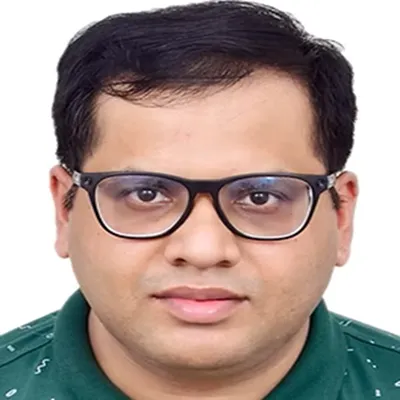
Dr. Debasis Mohapatra
Research Profile
Dr. Debasis Mohapatra is an Assistant Professor of Geotechnical Engineering in the Department of Civil Engineering at IIT (BHU), Varanasi. He received his PhD from the Indian Institute of Science (IISc), Bengaluru, and subsequently conducted research at City University of Hong Kong, Aalto University, and TU Delft. His research focuses on offshore geotechnics, computational geomechanics, and large-deformation problems, with particular interests in soil–structure interaction, constitutive modelling, progressive failure, seabed characterisation, and geohazards. His research integrates advanced numerical methods including the Material Point Method (MPM) and finite element modelling with experimental and data-informed approaches to understand and predict the behaviour of geotechnical systems.
PhD Opportunities
Motivated students interested in offshore geotechnics, computational geomechanics, MPM/FEM, large-deformation analysis, landslides and geohazards, or soil–structure interaction are encouraged to contact debasism.civ@iitbhu.ac.in . Detailed information is available under the Research Group section.
My research aims to understand and predict the behaviour of geomaterials and geotechnical systems under complex loading, large deformation, and failure. I combine computational geomechanics, physical modelling, and increasingly data-informed approaches to address fundamental and applied problems in offshore engineering, soil–structure interaction, progressive failure, and geohazards. Current research activities are organised around four interconnected themes.
Offshore Geotechnics & Seabed–Structure Interaction
This research theme investigates the behaviour of offshore foundations, marine sediments, and seabed–structure systems subjected to installation, environmental, monotonic, and cyclic loading. Particular interests include offshore wind foundations, cyclically loaded monopiles, seabed characterisation, penetration problems, subsea infrastructure, and scour. Computational modelling is combined with physical modelling and experimental observations to improve the understanding and prediction of offshore soil–structure interaction.
Topics: Offshore wind foundations · Monopiles · Marine sediments · Seabed characterisation · Penetration problems · Soil–structure interaction · Scour
Computational & Large-Deformation Geomechanics
This theme focuses on the development and application of advanced computational methods for geotechnical problems involving large deformation, failure, and post-failure behaviour. Particular emphasis is placed on the Material Point Method (MPM), finite element methods, meshless approaches, limit analysis, constitutive modelling, and coupled formulations. The objective is to develop robust computational frameworks capable of modelling the complete response of geotechnical systems from initial deformation through failure and large-scale post-failure movement.
Methods: MPM · FEM · Large-deformation analysis · Limit analysis · Constitutive modelling · Meshless methods · Coupled formulations
Geohazards & Progressive Failure
Research in this area addresses the initiation, evolution, and consequences of progressive geotechnical failure. Current interests include slope instability, landslides, strain localisation, progressive failure, and post-failure runout, with particular attention to the influence of spatial variability, soil–water interaction, and large deformation. The long-term objective is to improve the mechanics-based assessment and prediction of geotechnical hazards and contribute to the development of safer and more resilient infrastructure.
Topics: Landslides · Slope instability · Progressive failure · Post-failure runout · Spatial variability · Soil–water interaction · Geotechnical risk
Physics-Informed & Data-Driven Geomechanics
This research direction explores the integration of physics-based computational modelling with data-driven methods to improve the interpretation, identification, and prediction of geotechnical systems. Areas of interest include inverse parameter identification, surrogate modelling, uncertainty quantification, model updating, and efficient prediction of complex geotechnical behaviour. The broader objective is to combine observations, mechanics-based models, and computational intelligence to develop more reliable and computationally efficient approaches for geotechnical prediction.
Topics: Inverse analysis · Parameter identification · Surrogate modelling · Uncertainty quantification · Physics-informed learning · Data assimilation · Predictive modelling
Research Approach
Across these themes, my research seeks to connect fundamental soil mechanics, advanced computation, experiments, and observations. The aim is not only to simulate geotechnical behaviour, but to develop modelling and interpretation frameworks that improve our understanding of the mechanisms governing deformation and failure and ultimately support more reliable engineering prediction.
Selected peer-reviewed journal articles, conference papers, research datasets, and computational resources are listed below in reverse chronological order. For the complete and continuously updated publication record, please visit Google Scholar .
2026
2025
2024
2023
2022
2020
2019
2018
2017
2014
The research group works on fundamental and applied problems in offshore geotechnics, computational and large-deformation geomechanics, progressive failure and geohazards, and data-informed geomechanics. Our broader objective is to integrate soil mechanics, advanced computation, experiments, and observations to improve the understanding and prediction of complex geotechnical systems.
Research Group
The group is being established in the Department of Civil Engineering at IIT (BHU), Varanasi, under the supervision of Dr. Debasis Mohapatra. The group welcomes students interested in combining fundamental geotechnical mechanics with computational, experimental, and data-informed research.
Details of PhD, MTech, BTech, project, and visiting researchers will be updated as the group develops.
Research Opportunities
Potential research projects are available across the following interconnected themes. Specific topics are developed according to the student's background, research interests, and ongoing projects.
Opportunities
Depending on availability and Institute regulations, opportunities may include PhD research, MTech dissertations, BTech projects, research internships, project positions, and collaborative research.
Research Training
Students are expected to develop strong fundamentals while gradually gaining the independence required to formulate, analyse, and communicate original research problems.
- Strong grounding in soil mechanics, geotechnical engineering, and mechanics-based problem solving.
- Training in advanced numerical methods such as MPM, FEM, and related computational approaches, depending on the research problem.
- Exposure to scientific computing and research tools such as Python, MATLAB, C++, Fortran, Abaqus, PLAXIS, OpenSees, and research-oriented numerical codes, as appropriate to the project.
- Opportunities to integrate computational modelling with experimental, physical, field, or observational data.
- Training in research methodology, scientific writing, presentation, publication, and independent critical thinking.
- Opportunities for interaction and collaboration with researchers in India and abroad and, where appropriate, participation in national and international conferences.
Prospective Students
We particularly welcome students who are curious, self-motivated, willing to learn, and interested in understanding the mechanics underlying engineering problems. Prior experience in advanced computational methods is useful but not essential. Strong engineering fundamentals, persistence, and genuine interest in research are more important.
Students from Civil Engineering, Geotechnical Engineering, Engineering Mechanics, Applied Mechanics, Earthquake Engineering, or closely related disciplines with relevant interests are encouraged to contact the group.
Interested in Joining?
Please email debasism.civ@iitbhu.ac.in with:
- an updated CV;
- your broad research area(s) of interest;
- relevant computational, programming, experimental, or analytical experience; and
- a brief statement describing your research motivation and why you are interested in working with the group.
Email subject: Prospective Research Student – Your Name
Note: Formal admission to IIT (BHU) is governed by the Institute's applicable eligibility criteria and selection procedures. An expression of interest or email correspondence does not constitute an offer of admission.
My teaching interests span geotechnical engineering, site investigation, computational mechanics, and numerical modelling. I aim to connect fundamental soil mechanics with laboratory and field investigation, physical interpretation, computational modelling, and engineering problem solving. Students are encouraged to understand the physical basis of measurements and models, critically interpret results, and recognise the assumptions and limitations involved in geotechnical analysis.
Current Teaching at IIT (BHU)
Previous Teaching & Mentoring Experience
- Assisted in Offshore Geotechnical Engineering.
- Mentored PhD research activities.
- Finite Element Method Geoengineering
- Numerical Methods in Geotechnics
- Mentored PhD research activities.
- Mentored PhD research activities in geotechnical engineering.
- Finite Element and Mesh-Free Methods
- Earth and Earth Retaining Structures
- Soil Dynamics
- Finite Element Method
Teaching Philosophy
My teaching philosophy emphasises fundamental understanding, physical interpretation, and the critical use of experimental and computational tools. Students are encouraged not simply to follow established procedures, but to understand why an experiment, analytical method, or numerical model works, recognise its assumptions and limitations, verify results, and relate observations back to the physical behaviour of soils and geotechnical systems.
I aim to develop students' ability to move from observation → physical understanding → modelling → interpretation, while promoting independent thinking, careful verification, and research-oriented problem solving.
My academic journey combines advanced training in geotechnical and earthquake engineering with international research experience in computational geomechanics, offshore geotechnics, large-deformation analysis, and soil–structure interaction. My research career has included academic and research appointments across India, Hong Kong, Finland, the Netherlands, the United Kingdom, and the United Arab Emirates.
Education
2015–2020
2012–2014
2008–2012
Academic & Research Experience
September 2026–Present
January 2026–August 2026
June 2024–August 2025
June 2022–May 2024
June 2024–December 2024
April 2024–May 2024
November 2020–May 2022
July 2014–June 2015
Awards & Honours
Professional Service & Activities
- Life Member, Indian Geotechnical Society (IGS)
- Former President, IGS-IISc Young Members Chapter
- Reviewer for journals including Computers and Geotechnics, Ocean Engineering, and Sadhana
- Member of interview panels for PhD and postdoctoral selections at Aalto University, Finland
- Contributor to the organisation of conferences, workshops, and technical events in geotechnical engineering
Curriculum Vitae
A detailed curriculum vitae containing additional information on research, publications, awards, teaching, and professional activities is available upon request.
Academic profiles, publication databases, research resources, and professional links are provided below.
Academic Profiles
Research & Professional Links
Contact
Department of Civil Engineering
Indian Institute of Technology (BHU), Varanasi
Email: debasism.civ@iitbhu.ac.in